
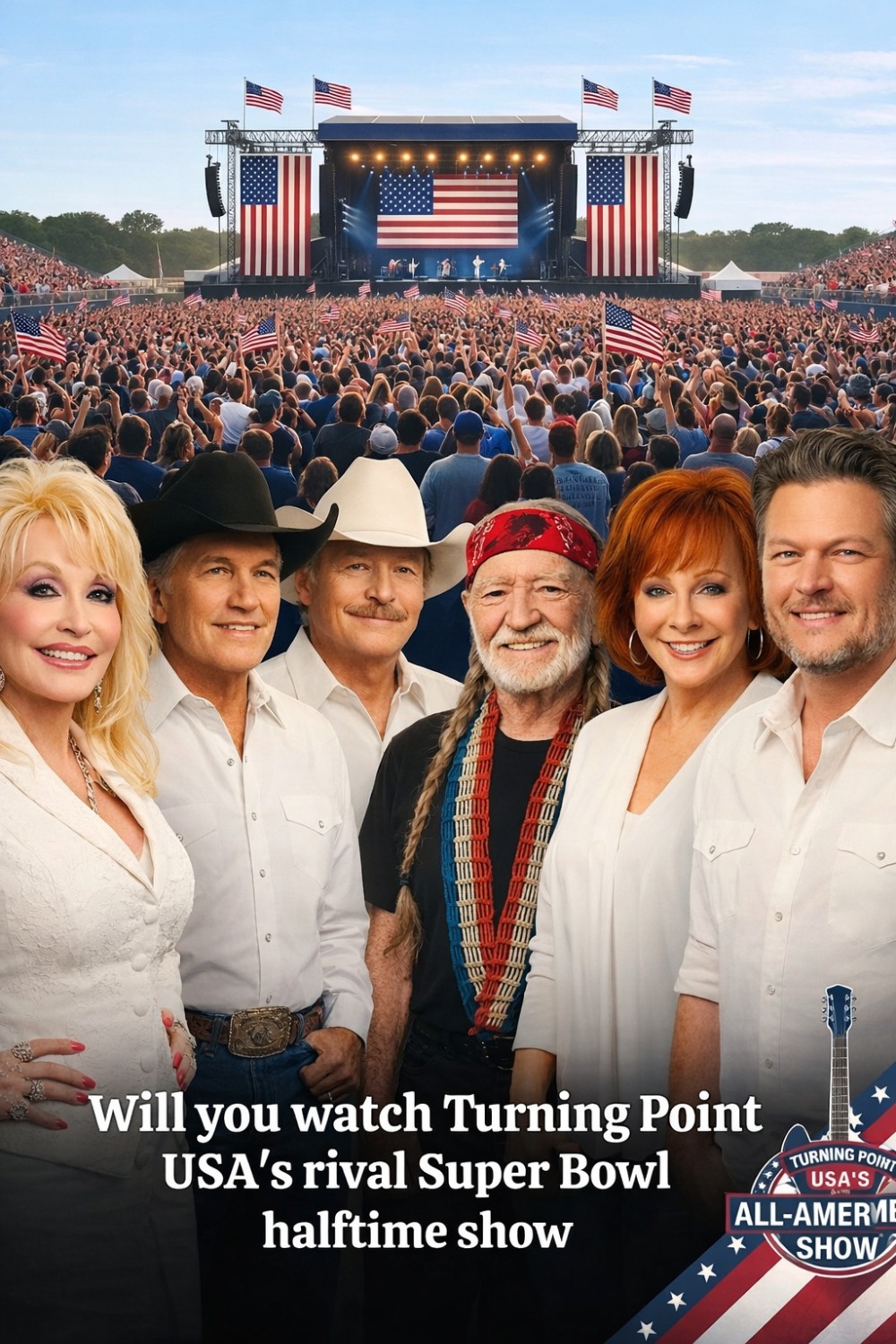
When Virality Outpaces Verification: Inside the Halftime Story That Split the Internet
A viral halftime rumor is tearing across social feeds, timelines, and group chats, proving again that speed, spectacle, and ideology can collide online before truth even finishes tying its shoes.
Mock posters, dramatic headlines, and supposed leaked lineups have flooded the internet, creating a cinematic illusion of certainty that feels official, authoritative, and emotionally irresistible to millions scrolling fast.

Yet beneath the glossy graphics and confident captions, there is a startling absence of confirmation, documentation, or verifiable sources, revealing how easily collective excitement can manufacture reality out of assumption.
Supporters connected to Turning Point USA have begun urging caution, warning audiences to slow down, breathe, and distinguish curiosity-driven speculation from facts that have actually been announced.
Their message is simple but unpopular in viral culture: interest does not equal confirmation, and enthusiasm alone does not magically transform an idea into a scheduled, funded, or approved event.
The rumored All-American themed halftime concept touches powerful cultural nerves, blending faith, family, patriotism, and entertainment into a symbolic package that naturally invites passionate reactions on all sides.
For supporters, the idea represents long-awaited representation and a cultural counterweight to mainstream halftime narratives they feel ignore or dismiss their values.
For critics, the same idea raises alarms about politicization, exclusion, and the blurring of entertainment with ideological messaging in spaces traditionally framed as neutral or unifying.
What makes this moment explosive is not merely the concept itself, but the speed at which imagined details hardened into perceived truth across platforms designed to reward certainty over skepticism.

Within hours, speculative graphics were reshared as breaking news, commentary videos treated rumors as settled facts, and emotional reactions multiplied faster than corrections could possibly keep up.
No official performer list has been released, despite confident claims circulating online that name specific artists as if contracts were already signed and stages already built.
No confirmed location exists either, even though maps, stadium photos, and city names are being confidently paired with the rumor in viral posts.
No timing has been announced, yet countdowns, predictions, and scheduling debates rage across comment sections as if calendars were already locked in.
This gap between curiosity and confirmation is not empty space; it is fertile ground where imagination, identity, and algorithmic amplification collaborate to produce digital wildfire.
Social media platforms thrive on engagement velocity, not accuracy, meaning the most emotionally charged interpretation often travels farthest, regardless of whether it rests on solid ground.
In this environment, disclaimers are boring, uncertainty is inconvenient, and patience feels like losing relevance in a race where attention is the ultimate currency.
The halftime rumor has therefore become less about a potential show and more about how narratives are born, nurtured, and weaponized in real time.
Once a storyline aligns with existing beliefs or grievances, it gains defenders who feel personally invested, even if the original claim remains unverified.
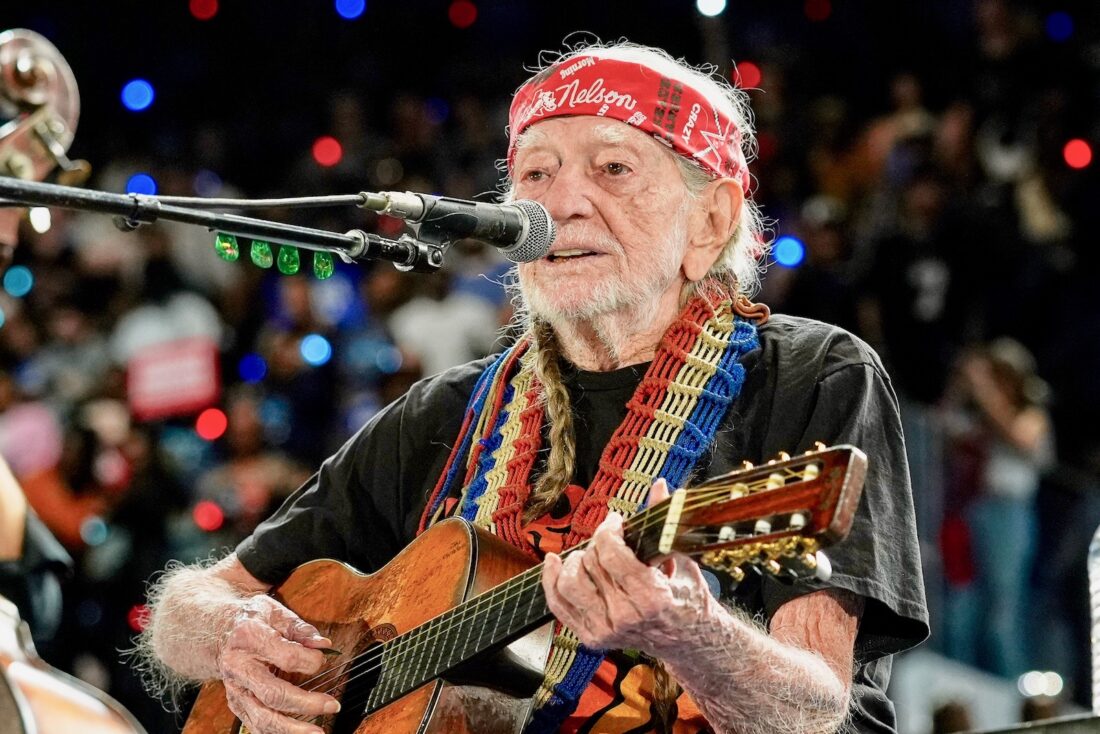
Questioning the narrative can then feel like an attack, not on facts, but on identity, values, or community belonging.
That emotional attachment makes later corrections feel suspicious, biased, or even conspiratorial, deepening divides instead of resolving confusion.
Supporters urging caution now face the paradox of trying to slow a machine that rewards speed, outrage, and certainty over nuance.
Their calls for verification struggle to compete with viral visuals engineered to feel conclusive, exciting, and share-worthy within seconds of viewing.
Meanwhile, critics sometimes amplify the rumor themselves, attacking it as if it were real, inadvertently strengthening the illusion they seek to dismantle.
This feedback loop ensures that speculation gains legitimacy simply by being debated loudly and repeatedly across multiple platforms.
The result is a cultural moment where perception outruns process, and imagined outcomes generate real emotional, social, and political consequences.
Even if the rumored event never materializes, the reactions to it have already shaped conversations about media trust, cultural power, and ideological visibility.
Fans feel mobilized, opponents feel threatened, and casual observers feel overwhelmed by the sheer volume of confident claims pointing in every direction.
This phenomenon is not unique, but it is increasingly common as digital ecosystems collapse the distance between idea, rumor, and assumed reality.
Every like, share, and comment becomes a micro-vote for which version of the story deserves oxygen, regardless of its factual foundation.

The halftime controversy exposes how easily narratives can be crowdsourced, emotionally reinforced, and algorithmically elevated before institutions even respond.
It also raises uncomfortable questions about responsibility, asking who should pause the momentum when speculation starts masquerading as confirmation.
Is it the platform, the influencer, the audience, or the organizations tangentially associated with the idea being discussed?
In truth, responsibility is diffuse, which makes accountability elusive and correction painfully slow.
The longer ambiguity persists, the more entrenched assumptions become, solidifying positions that may later feel embarrassed, betrayed, or manipulated.
Some will argue that the truth eventually surfaces and corrects the record, making early frenzy harmless entertainment.
Others counter that first impressions linger, shaping emotional memory long after clarifications quietly pass unnoticed.
What is undeniable is that the halftime rumor has already succeeded as a case study in digital psychology and modern information warfare.
It demonstrates how symbols, values, and spectacle can be combined into a narrative powerful enough to mobilize millions without a single official announcement.
The story also highlights the fragility of trust in an era where authenticity is often inferred from aesthetics rather than evidence.

High-quality graphics, authoritative tone, and repetition now substitute for sourcing in the eyes of many users.
As audiences, we are left navigating a landscape where skepticism feels exhausting and belief feels emotionally efficient.
Yet moments like this demand precisely the opposite response: slower thinking, sharper questions, and a willingness to sit with uncertainty.
Whether the rumored halftime event ever becomes real almost feels secondary to the lessons unfolding in real time.
The internet has shown, once again, that narratives do not wait for permission to exist.
They emerge, spread, and solidify at the speed of shares, daring reality to catch up.
And in that race, the greatest challenge is not discovering the truth, but recognizing when we have mistaken anticipation for fact.