This was not just another lost-movie mystery getting a glamorous festival resurrection.
This was Aretha Franklin’s voice, her face, her church-stage power, and her right to decide when the world could watch it.
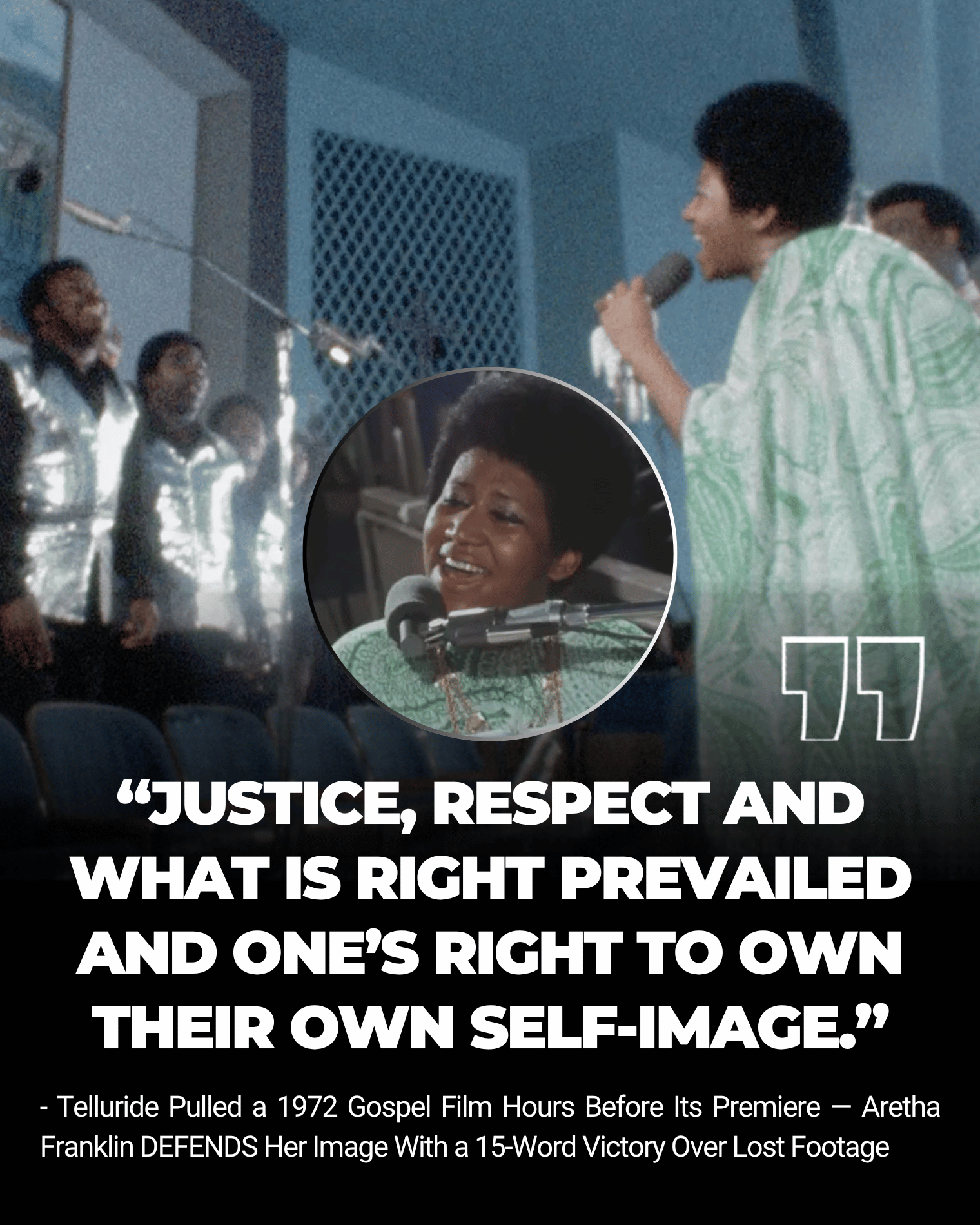
In 1972, Sydney Pollack filmed Franklin recording Amazing Grace at New Temple Missionary Baptist Church in Los Angeles.
The setting was sacred, intimate, and electric, with Franklin not performing like a pop star chasing applause, but singing like a woman calling heaven into the room.
The footage should have become a landmark almost immediately.
Instead, technical problems trapped it.
For years, the film sat in limbo, turning into one of music history’s most whispered-about treasures while the album became a towering gospel release on its own.
But lost footage can become dangerous when people forget a living artist still owns her image.
By 2015, Telluride Film Festival was preparing to screen Amazing Grace, and the long-buried film suddenly seemed ready to step into the spotlight.
For cinephiles and music fans, it looked like a miracle delayed by more than four decades.
Aretha saw something else.
She saw a film of her, made in a church, built around her voice, being presented without her consent.
And just hours before the scheduled premiere, she fought back with the authority of a woman who understood exactly what was being taken.
The screening was stopped.
Franklin won an injunction, and the festival lost its chance to unveil the movie on its own terms.
What could have been sold as nostalgia instantly became a battle over ownership, respect, and the limits of public hunger.
Then Aretha delivered the line that turned the legal win into something bigger.
“Justice, respect and what is right prevailed and one’s right to own their own self-image,” she said.
Fifteen words, but they landed with the weight of a career spent demanding dignity in rooms that did not always give it freely.
That statement was not just about a movie.
It was about control.
It was about the difference between honoring a legend and using her image because the footage was too powerful to resist.
For fans, the blocked premiere may have felt heartbreaking.
The film promised something almost mythic: Aretha in her gospel glory, caught at the altar of sound, before time and legal fights buried the reels.
But Franklin’s point cut deeper than excitement. A masterpiece still needed permission.
That is what made the Telluride showdown so dramatic.
A festival wanted history.
Aretha wanted respect, and she made it clear that no amount of artistic importance could erase her right to protect herself.
In the end, Amazing Grace was never just lost footage.
It was evidence of a sacred performance and a reminder that even a queen’s voice does not become public property simply because the world wants to hear it.
Aretha Franklin did not just defend a film; she defended the altar, the image, and the consent behind every frame.