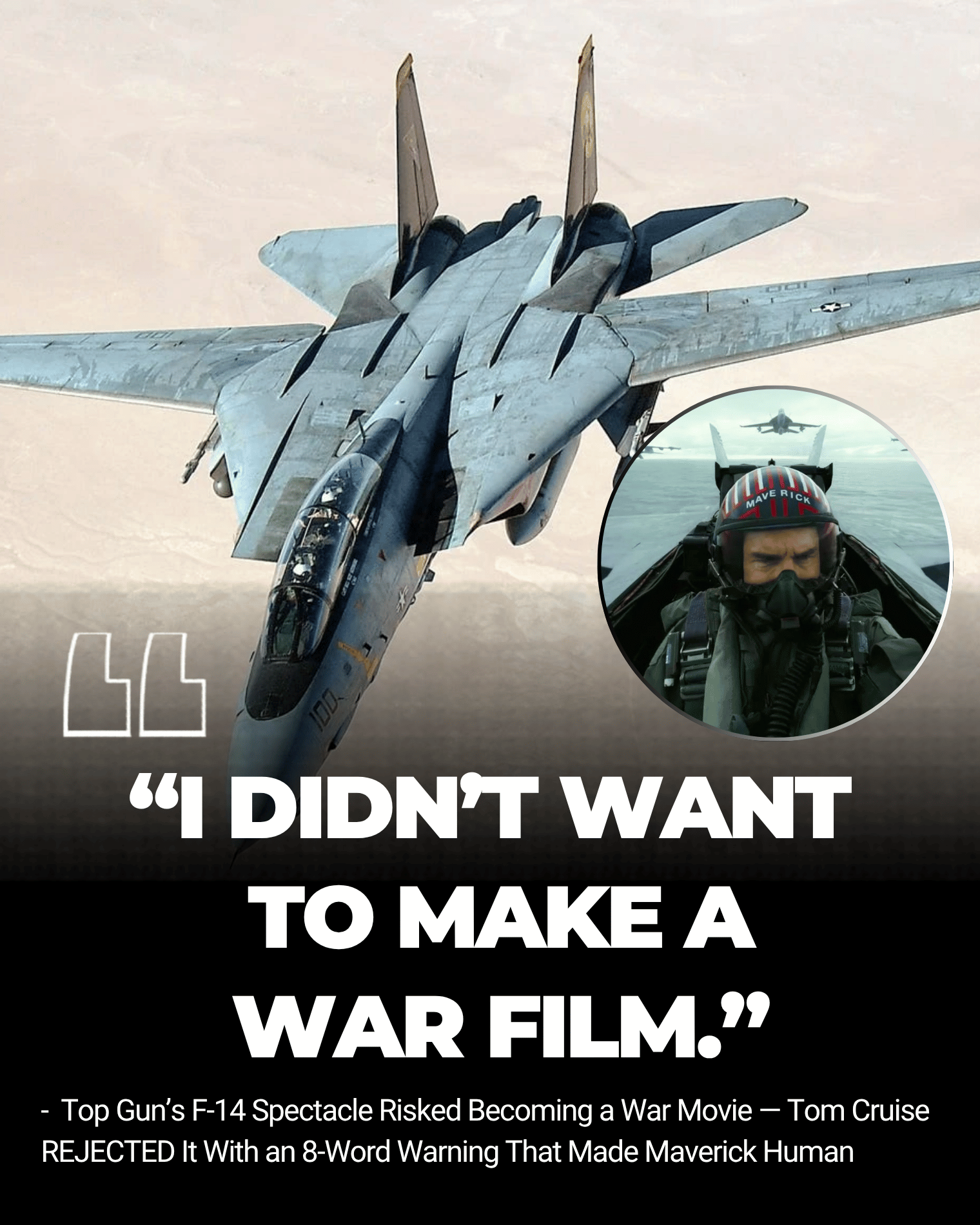
Before the 1986 blockbuster turned fighter jets, aviator shades, and beach volleyball into permanent pieces of pop-culture mythology, Tom Cruise reportedly saw a major danger hiding inside the F-14 spectacle.
“I didn’t want to make a war film,” Cruise said, drawing a hard line between a glossy Navy showcase and something with actual emotional stakes.
That warning mattered because Top Gun arrived loaded with everything Hollywood could use to drown out character: roaring engines, missile locks, sunlit runways, and the kind of airborne action that practically begged to become a recruitment poster.
But Cruise was not chasing a polished pilot who always had the right answer, the perfect smile, and no fear behind his eyes.
Instead, he pushed toward Pete “Maverick” Mitchell as a gifted young flyer carrying far more baggage than swagger, a man whose confidence was inseparable from pain, recklessness, and a desperate need to prove himself.
Cruise spent time with Navy pilots at Miramar, searching for the lived-in details that could make Maverick feel less like a uniformed fantasy and more like someone cracking under impossible pressure.
The result was a character who could stare down a rival in the locker room, charm an instructor at a bar, and still look completely lost when grief finally caught him.
That tension became the secret fuel behind Top Gun, turning every cockpit sequence into more than a visual flex and every flight into another test of Maverick’s fragile emotional armor.
The movie gave audiences the swagger, absolutely, but Cruise’s early resistance stopped it from becoming an empty salute to jets and explosions.
Maverick’s real enemy was never simply another aircraft in the sky; it was the fear that he could not escape his father’s shadow, his best friend’s death, or his own self-destructive instincts.
Even his rivalry with Iceman landed harder because it was not merely about two pilots competing for status, but about two completely different ideas of what bravery looked like at terrifying speed.
Maverick wanted to be fearless, while Iceman understood that survival demanded discipline, restraint, and the humility to know that nobody is invincible.
That conflict helped make Top Gun feel bigger than a war movie without pretending the danger was fake, because the characters were always one bad decision away from losing everything.
Cruise’s insistence on psychology gave the film its pulse, transforming a loud 1980s action machine into a story about grief, ego, belonging, and a young man trying to become worthy of trust.
Nearly four decades later, the F-14 shots still hit with cinematic force, but Maverick’s haunted look is what gives them weight long after the engines stop screaming.
The real miracle is that Cruise saw the trap before the cameras even rolled, then helped turn a potential military postcard into a wildly emotional story about a pilot fighting to land inside himself.