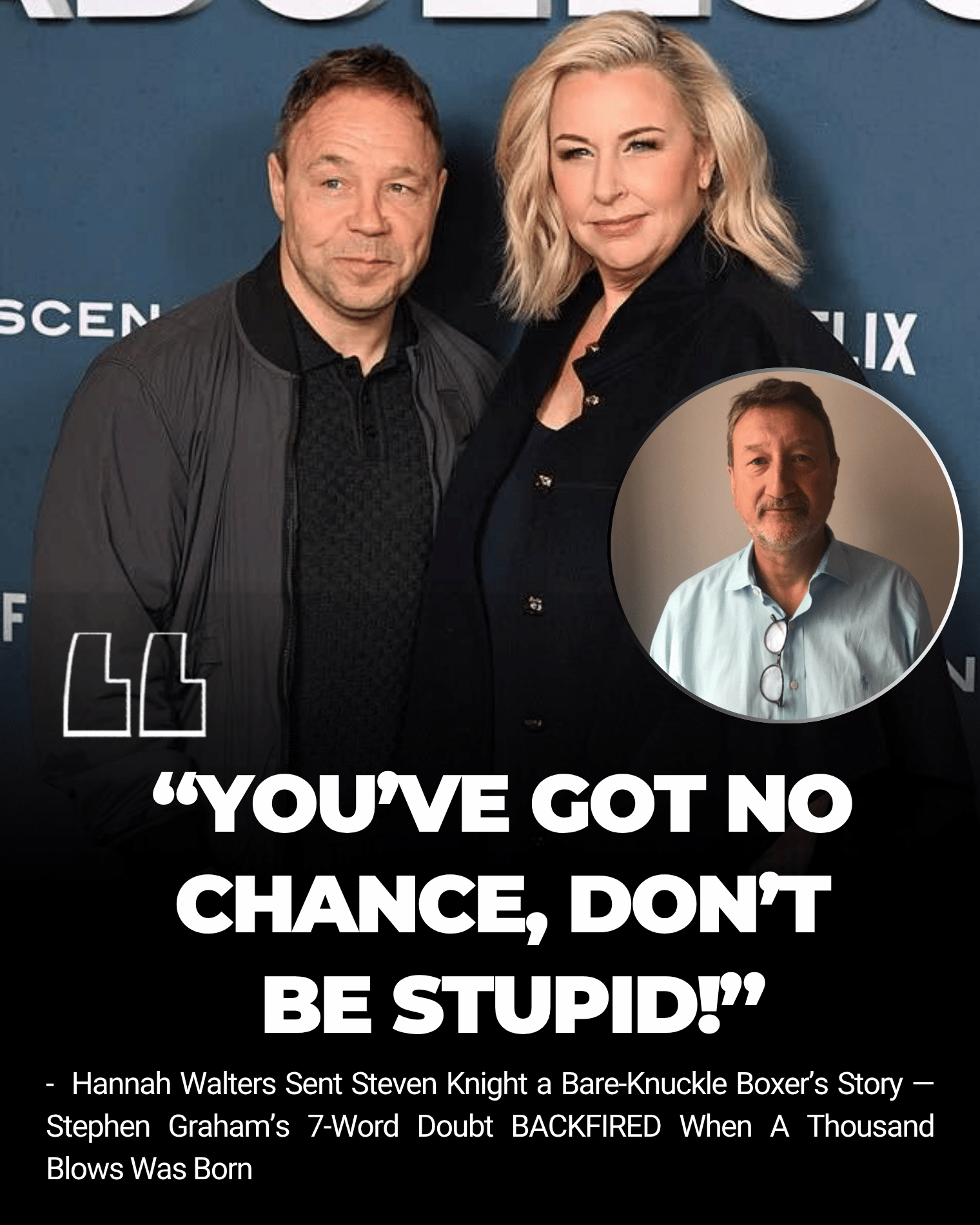
Stephen Graham may have thought he was shutting down a wild idea before it even had time to breathe, but fate clearly had other plans.
His wife, producer and Matriarch co-founder Hannah Walters, had stumbled across a photograph connected to Hezekiah Moscow, a real-life boxer whose extraordinary story felt made for television.
Walters saw something explosive in the image: a forgotten fighter, a brutal Victorian London world, and the kind of underdog tale that could ignite on screen.
But when she floated the concept to Graham, her longtime creative partner and Peaky Blinders star, his reaction was not exactly a standing ovation.
“You’ve got no chance, don’t be stupid!” Graham reportedly told her, delivering the seven-word dismissal that could have ended the idea right there.
It was the kind of blunt, bare-knuckle response that might have made anyone else retreat, especially when the project involved taking an obscure historical figure to a major drama creator.
Walters, however, did not let Graham’s skepticism become the final word, and she sent the material to Steven Knight anyway.
Knight was already the mind behind Peaky Blinders, a writer who had turned smoke-filled streets, crime families, and overlooked history into addictive prestige television.
Four days after receiving the story, Knight delivered the answer that flipped Graham’s certainty completely upside down: he loved it and wanted to begin.
Suddenly, the pitch Graham had written off as impossible was no longer a distant dream; it was moving toward a full-scale production.
The result became A Thousand Blows, a period drama inspired by Hezekiah Moscow’s journey through the fiercely dangerous underground boxing scene of Victorian-era London.
And in the ultimate twist, Graham did not merely watch the project happen from the sidelines after doubting it.
He stepped directly into its world, starring in the series and serving as an executive producer alongside Walters, the woman who refused to let his first reaction kill the story.
That reversal gives the project an extra jolt of drama beyond anything written into the script, because the earliest obstacle was sitting inside the creative team itself.
What began with a photograph, a wife’s instinct, and one very dismissive response became a major public payoff for Walters and Graham’s production company.
Graham’s initial doubt did not destroy A Thousand Blows; it became part of the legend behind it.