For millions, “You’re Still the One” is wedding-floor magic, an anniversary soundtrack, and the kind of slow-dance confession that makes a crowded room suddenly feel private.
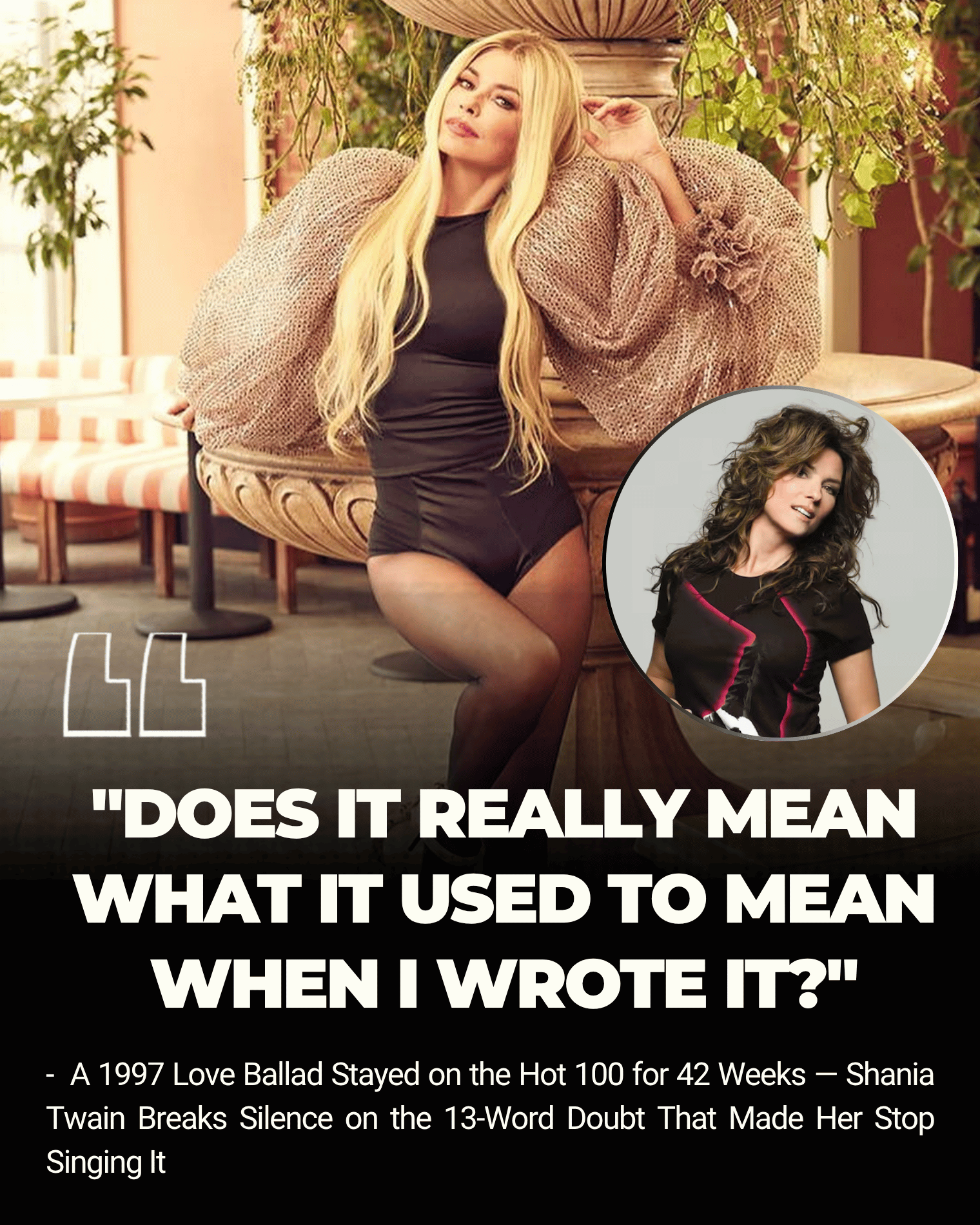
But behind that polished, impossible-to-shake chorus sat a far more complicated truth for Twain, who had written the 1997 smash with Robert “Mutt” Lange, then her husband and creative partner.
When their marriage ended, the song did not simply become another classic in the set list; it became a beautiful memory with a sharp edge waiting backstage.
Twain eventually admitted she passed through a period when singing it live felt almost impossible, stopped cold by the emotional collision between the lyrics and her own changed life.
Her question was devastatingly direct: “Does it really mean what it used to mean when I wrote it?” Thirteen words, no theatrics, yet enough to crack open a global love anthem.
That moment matters because “You’re Still the One” never sounded like a casual pop hit; it was built around survival, devotion, and making it through the doubts.
The irony is brutal: a song originally shaped by one relationship kept growing bigger than the relationship itself, even while its creator wrestled with what every familiar lyric now carried.
Then the fans quietly changed the ending. They kept bringing the song into their biggest moments—weddings, anniversaries, reunions, friendships, and every hard-won promise that refused to disappear.
Instead of demanding that Twain sing it exactly as she once did, audiences handed her thousands of new reasons to hear it differently, stripping away the pressure of its original autobiography.
In 2025, she explained that this shared connection gave the song a renewed meaning, because what it represented to listeners became meaningful to her all over again.
That is the real stunner here: the crowd did not erase the pain or pretend the past never happened; they transformed one woman’s private hesitation into a public act of healing.
And there is something wildly fitting about it. The woman who delivered an era-defining anthem of romantic certainty eventually discovered its durability had nothing to do with preserving one perfect love story.
It survived because people everywhere borrowed it for their own. A first dance, a fifty-year milestone, a best friend’s loyalty, or a couple refusing to give up could all fit inside its melody.
Twain is not rewriting history, and she is not pretending that a difficult song became easy overnight. She is letting it belong to the people who never stopped believing in it.
So when she sings “You’re Still the One” now, the words do not have to point backward toward one vanished marriage. They can point outward, toward every listener who made the song theirs.