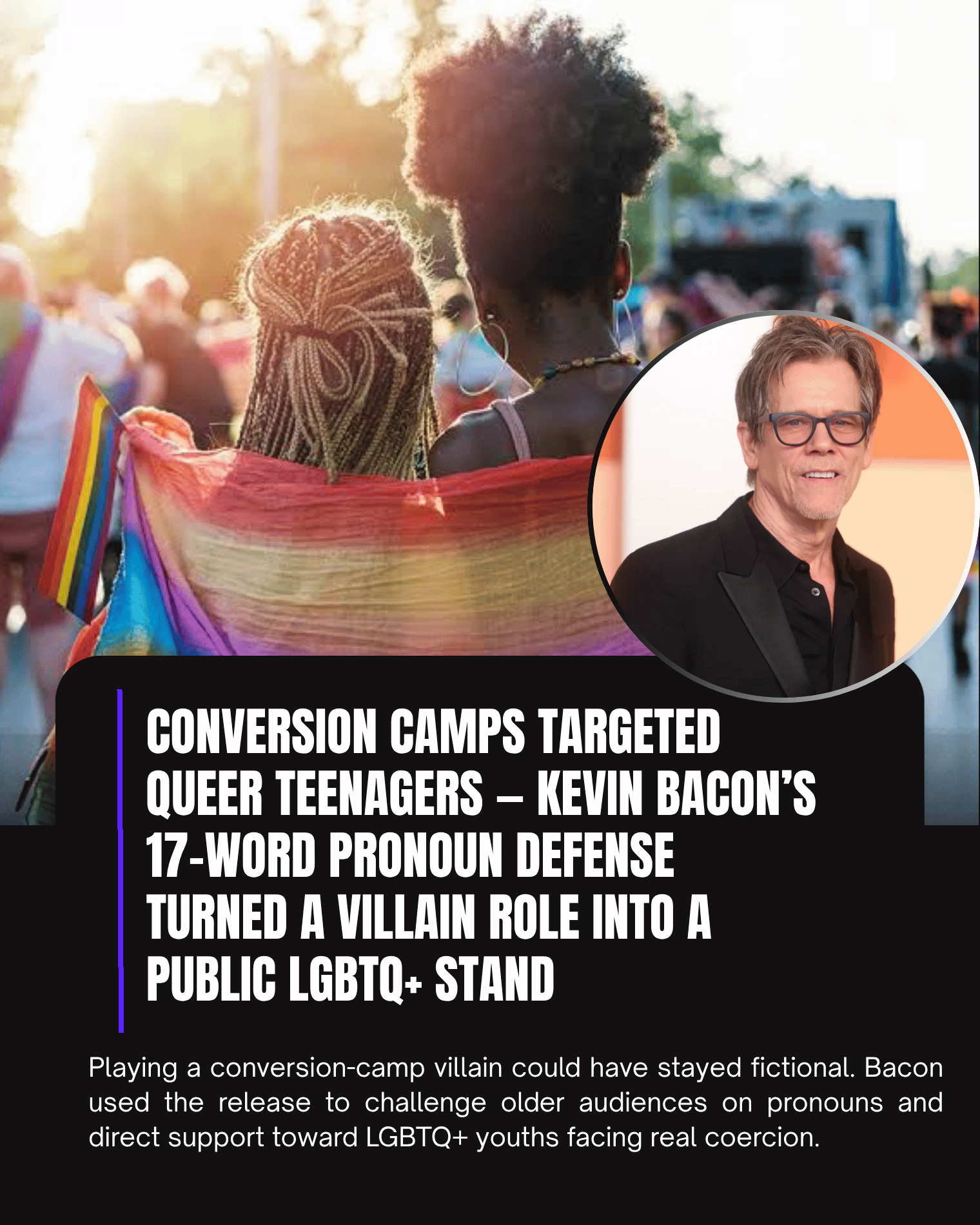
Conversion Camps Targeted Queer Teenagers — Kevin Bacon’s 17-Word Pronoun Defense Turned a Villain Role Into a Public LGBTQ+ Stand became more than a horror-film headline when the actor challenged audiences to reconsider their treatment of queer young people.
In Peacock’s 2022 slasher film They/Them, Kevin Bacon played Owen Whistler, the smiling but menacing owner of a conversion camp targeting LGBTQ+ teenagers.
He also executive-produced the project, helping push a disturbing real-world practice into a mainstream genre movie designed to reach audiences beyond activists and medical professionals.
The role could easily have remained fictional, with Bacon promoting the scares, discussing his villainous performance, and moving on to his next Hollywood project.
Instead, he used the film’s release to speak directly about pronouns, acceptance, and the damage caused when adults refuse to respect young people’s identities.
“Is it that much of a hardship to adjust your way of thinking? I don’t think so,” Bacon said while addressing resistance to using someone’s requested pronouns.
The remark was simple, but it cut directly through arguments portraying basic respect as an impossible burden or an attack on personal freedom.
Bacon’s position carried additional weight because he was not playing the heroic rescuer in They/Them.
He portrayed the authority figure creating the terror, a man using power, manipulation, and supposed treatment to pressure vulnerable teenagers into denying who they were.
That choice prevented the story from making conversion practices appear harmless, misunderstood, or merely old-fashioned.
By placing the camp owner at the center of a horror narrative, the film presented coercive attempts to change sexual orientation or gender identity as something genuinely frightening.
Off-screen, Bacon supported the Born Perfect campaign, which works to end conversion therapy and protect LGBTQ+ youths from being subjected to such practices.
His involvement connected the fictional camp to teenagers facing real pressure from adults, institutions, and programs claiming they could change fundamental parts of their identity.
Major medical and mental-health organizations have repeatedly condemned conversion therapy, warning that it lacks scientific support and can cause serious emotional harm.
Bacon’s promotional comments therefore did not invent a controversy; they helped bring an already documented crisis into popular entertainment and celebrity conversation.
The pronoun debate became another part of that wider struggle, because refusing someone’s identity can begin with language before escalating into exclusion or coercion.
Bacon framed adjustment not as a sacrifice, but as a manageable act of consideration that older or skeptical audiences could make without losing anything themselves.
Hollywood actors often receive praise for playing villains, especially when the performance is chilling, complicated, or dramatically entertaining.
Bacon went further by making clear that the beliefs driving his character were not simply provocative material for a horror movie.
His public stance turned promotion into advocacy, directing attention toward young people whose experiences could otherwise be reduced to fictional suspense.
Rather than softening the subject, he used the villain role to expose it, then stepped outside the character to demand greater empathy from the audience.
The result was a striking reversal: the man portraying the camp’s source of terror became one of the film’s clearest voices for respect.
With one pointed question, Bacon transformed a horror release into a wider challenge—asking whether changing a few words was really harder than protecting vulnerable teenagers.