Before the Beatles became the screaming center of American pop culture, they were young musicians absorbing everything that moved them.
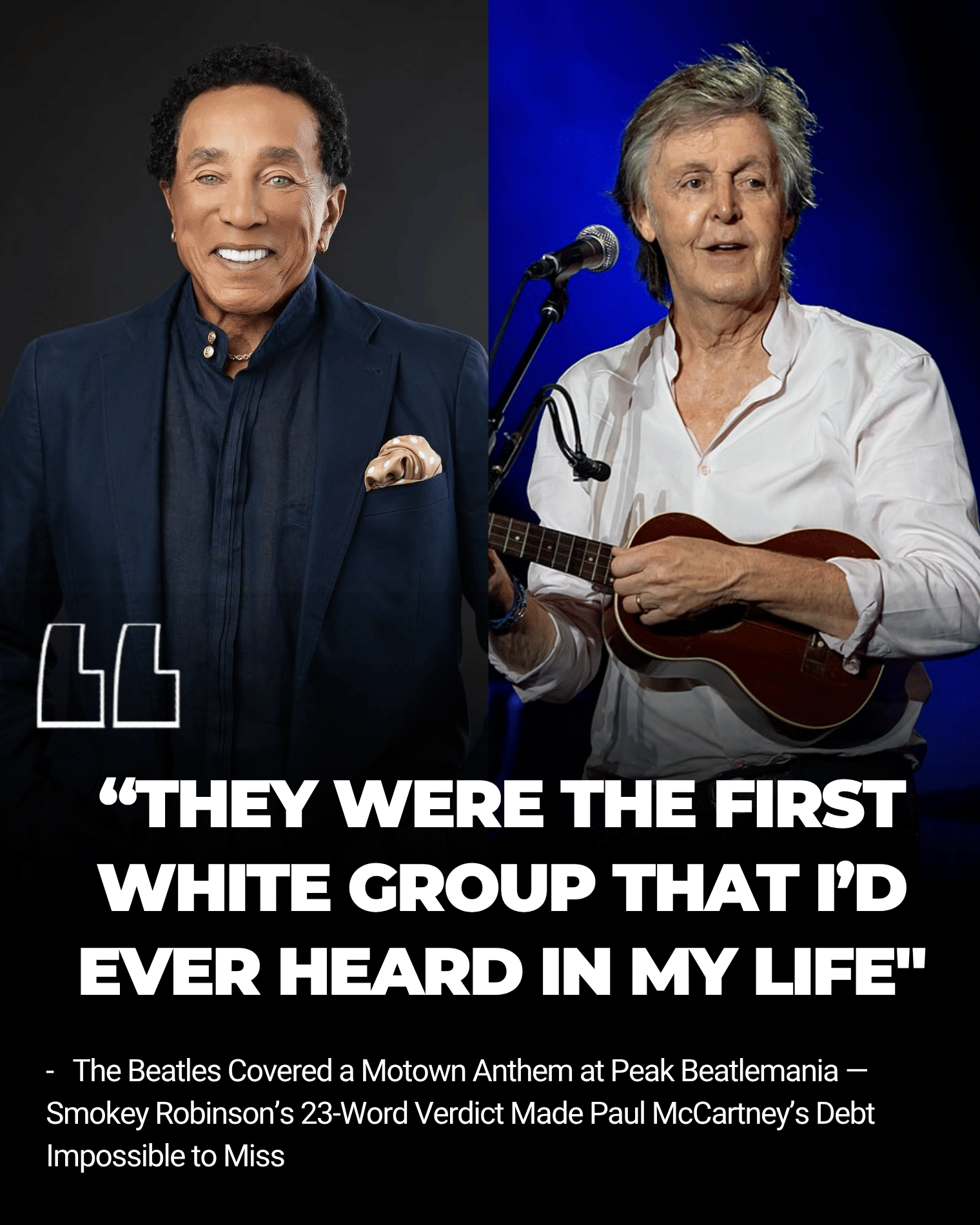
And one of the voices shaping that hunger belonged to Smokey Robinson, whose elegance, melody, and heartbreak had already changed soul music.
In 1963, the Beatles recorded “You Really Got a Hold on Me” for With the Beatles, pulling a Miracles classic into their early catalog.
To fans, it was another sign of the band’s range, but underneath it was something much deeper than a simple cover.
The song carried Motown’s emotional architecture straight into the Beatles’ world.
It showed four Liverpool musicians openly reaching toward Black American music at a time when many white pop acts borrowed without saying where the fire came from.
That is why Smokey Robinson’s later reflection hit with such force.
He said, “They were the first white group that I’d ever heard in my life who said, ‘Yeah, we grew up listening to Black music.’”
Those 23 words did not just praise the Beatles.
They exposed the difference between influence and erasure, between loving a sound privately and admitting its source publicly.
For Robinson, the acknowledgment mattered because the music industry had long taken from Black artists without giving equal credit, money, or visibility.
So hearing the biggest band in the world name those roots was not a small courtesy.
It was a public correction, especially when Beatlemania made every Beatles interview, record, and gesture feel magnified.
If they said Motown mattered, millions of young fans suddenly had a path back to the artists who built the sound.
Paul McCartney’s admiration made the connection even more personal.
He did not treat Robinson as a distant influence to be mentioned politely after the fact.
He treated him like a hero whose writing had helped teach the Beatles how longing could sit inside melody.
That debt came through not only in the cover, but in the way the band spoke about the music that raised them.
The drama here is not a feud or a scandal.
It is the quieter tension of pop history: who gets celebrated, who gets copied, and who gets remembered as the origin.
The Beatles became so huge that their versions could have swallowed the source material for less curious listeners.
But their open credit helped keep the door open, pointing fans toward Robinson, Motown, and the Black artists behind so much of modern pop.
That does not erase the larger imbalance of the era.
Black innovators still faced barriers that white performers often did not, even when their music shaped the global mainstream.
But Robinson’s verdict shows why the Beatles’ honesty stood out to him.
They did not pretend their sound arrived from nowhere, and they did not hide the records that lit the match.
In the end, “You Really Got a Hold on Me” became more than an early Beatles album cut.
It became proof that even at the edge of superstardom, the band was still pointing back to the music that grabbed them first.
Smokey Robinson’s 23-word memory turned that cover into something bigger than tribute.
It made Paul McCartney’s debt impossible to miss, and it reminded listeners that behind Beatlemania’s roar, Motown was already singing.